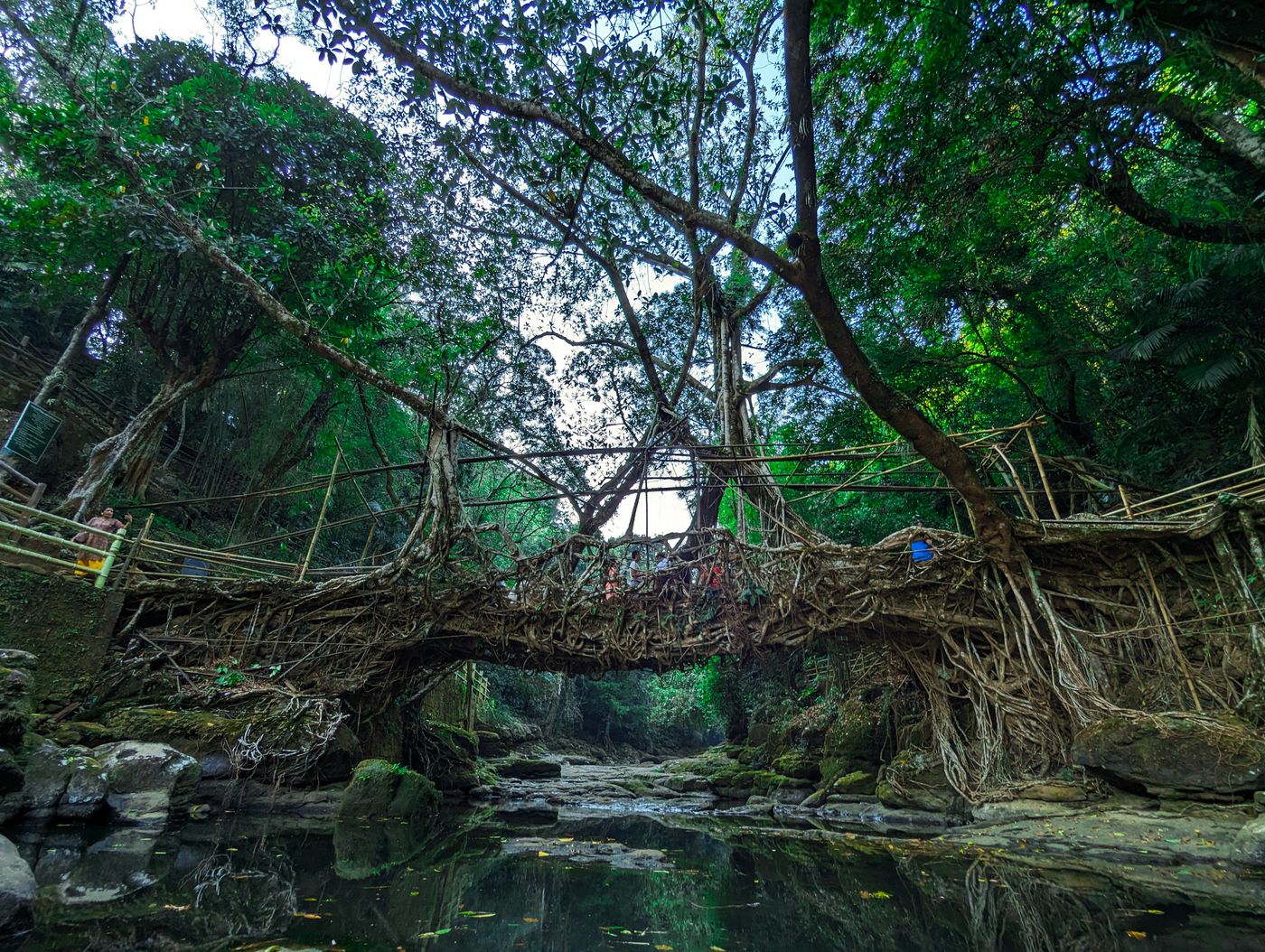
Grown over generations from the roots of rubber-fig trees, Meghalaya's double-decker living root bridge at Nongriat is one of India's most extraordinary sights. Here's how to trek to it — and enjoy it.
The living root bridges of Meghalaya are feats of Khasi bio-engineering — bridges literally grown, not built, by training tree roots across rivers over 15 to 30 years. The most famous of all is the double-decker bridge at Nongriat, two spans stacked one above the other, deep in the rainforest below Cherrapunji.
How hard is the trek?
Let's be honest: it's a workout. From the trailhead at Tyrna, you descend roughly 3,500 stone steps to Nongriat, crossing swaying steel suspension bridges over turquoise rivers. Going down is easy on the lungs but tough on the knees; the climb back up is the real challenge. There's no technical difficulty — just steps — but a basic level of fitness makes it far more enjoyable.
- Total: about 3,500 steps each way, 2–3 hours down, 3–4 hours up.
- Take it slow, rest often, and there are tea stalls along the way.
- Trekking poles genuinely help on the descent.
Stay overnight — don't rush it
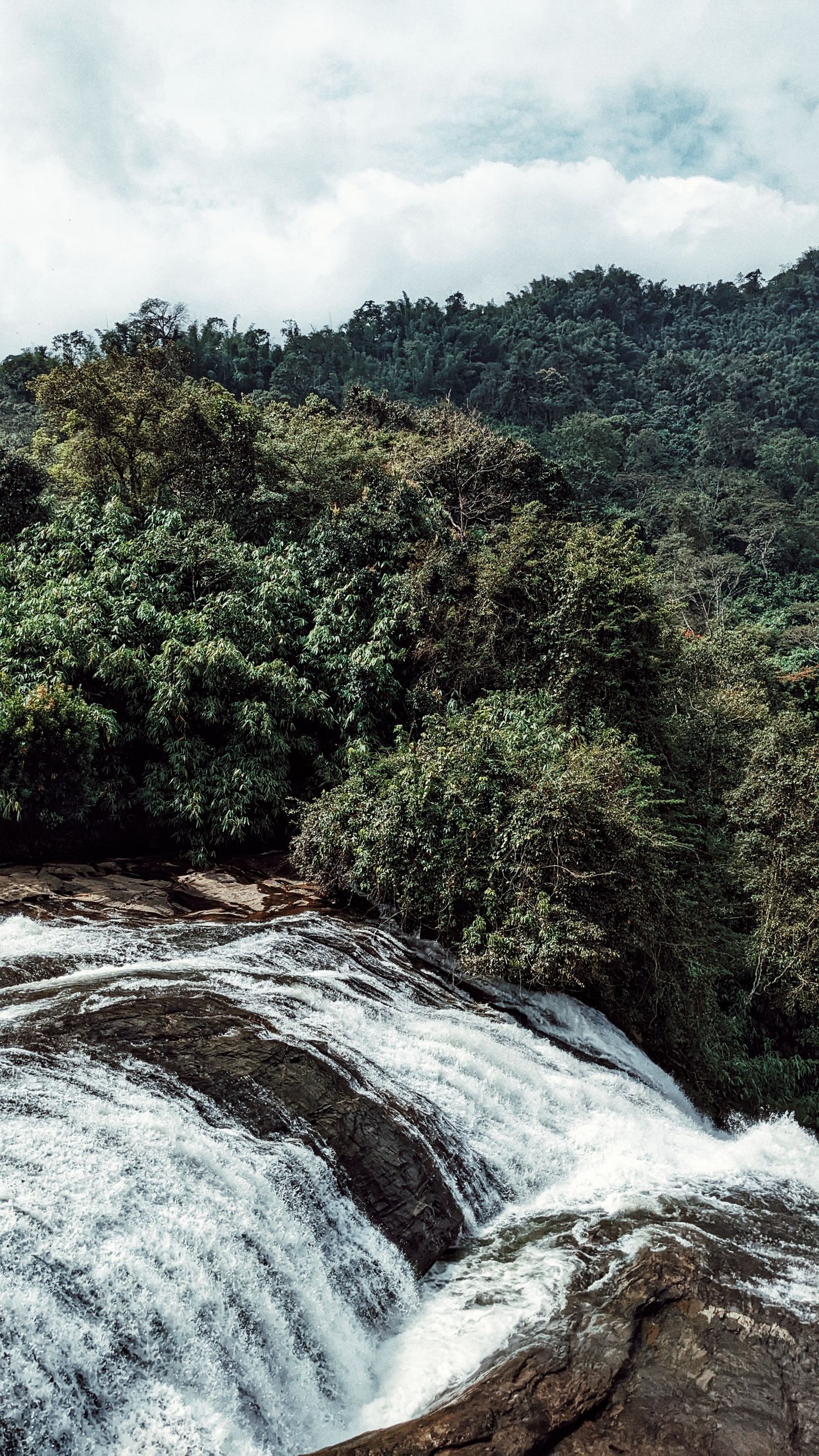
Many people try to do Nongriat as a day trip and regret it. Staying a night in a simple village homestay lets you enjoy the bridge and the natural swimming pools after the day crowds leave, and splits the climb so you tackle the ascent fresh the next morning. It also opens up the further hike to the stunning turquoise Rainbow Falls.
Nongriat after dark — fireflies, a rushing river and a sky full of stars — is worth every one of those 3,500 steps.
🎒 Planning this trip?
Living Root Bridge Trek (Nongriat) Meghalaya Root Bridges Trekking Tour Golden Triangle Group Tour All Kashmir trips →Best time to go
October to April is ideal, when the trail is drier and the pools are perfect for a swim. Avoid the peak monsoon (June to August) when the steps are slippery and leeches come out — though the rainforest is at its most dramatic then.
What to pack
- Grippy trekking or sports shoes (not slippers).
- A small daypack, water and snacks — refill points are limited.
- Quick-dry clothes and a towel for the pools.
- A rain layer, and leech socks if you go in the wet season.
- A torch or headlamp for the homestay.
Respect the villages
Nongriat and the surrounding hamlets are small, close-knit communities. Carry your waste back out, support the local homestays and shops, and ask before photographing people. The root bridges themselves are living, fragile structures — tread gently.
Ready to trek it?
Our Nongriat living root bridge trek includes a local guide, the village homestay and the logistics, so all you bring is the enthusiasm. Prefer a longer trip? The Meghalaya root bridges trekking tour combines it with Dawki and the classic sights.